It Takes More Than Oxygen
Award-winning research from FREO2 Uganda shows how oxygen can move from equipment to a reliable health service
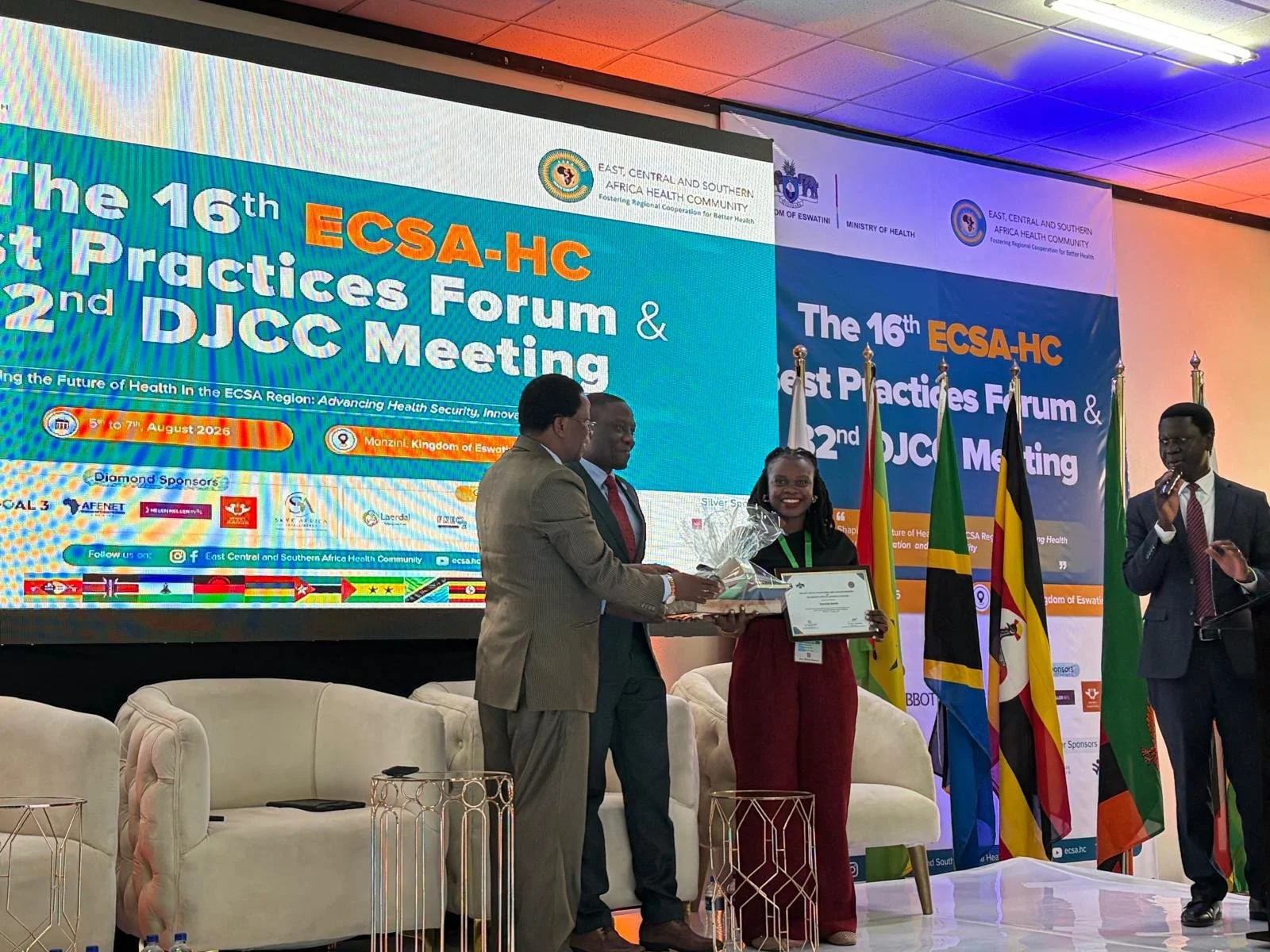
Presented at the ECSA-HC Best Practices Forum in Eswatini, new research from FREO2’s Uganda team received the Best Young Researcher Award for best abstract presentation. This World Oxygen Day, we explore what the findings tell us about the people, technology and health systems needed to turn oxygen access into reliable care.
When a newborn or child arrives at a health facility critically ill, having an oxygen concentrator in the building is not enough.
Someone needs to recognise that the child is seriously unwell. A health worker needs the right tools to identify low blood oxygen levels, or hypoxaemia. They need the knowledge and confidence to act. Medical oxygen needs to reach the bedside, at the right purity and flow. The equipment needs to work, and keep working. And when something goes wrong, someone needs to know about it and be able to fix it.
Because ultimately, the goal isn't oxygen equipment. The goal is making sure a critically ill child receives the essential care they need, when they need it.
This World Oxygen Day, we're looking at what it really takes to turn oxygen into reliable care, and what Uganda is teaching us about building systems that can sustain it.
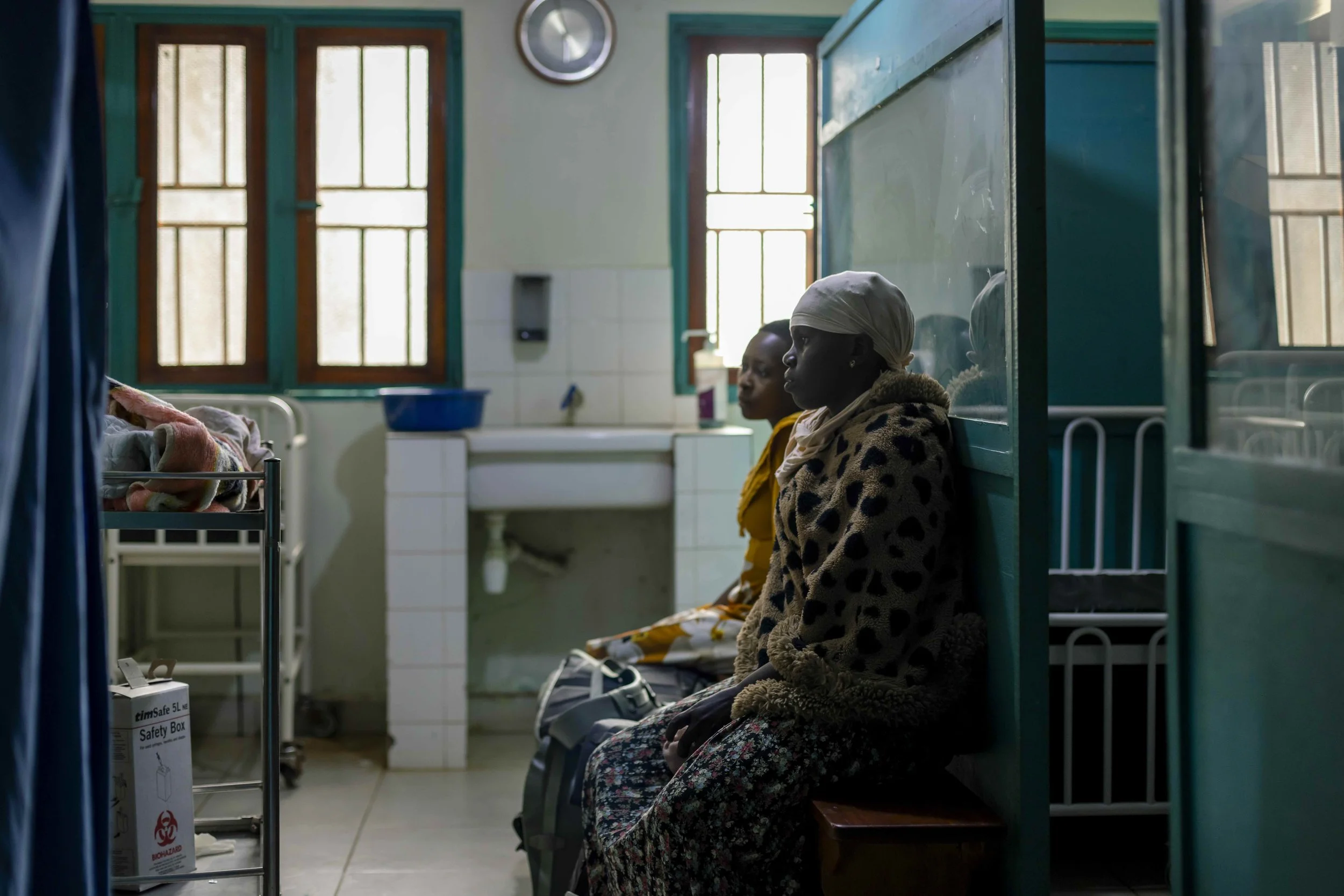
Equipment alone doesn't deliver oxygen
Uganda has made significant investments in medical oxygen, particularly since the COVID-19 pandemic. But the challenge facing many health facilities is not simply whether oxygen equipment exists. It is whether that equipment works, whether health workers can identify the patients who need it, and whether the wider systems needed to deliver oxygen safely and reliably are in place.
National data cited in recent FREO2 research illustrates the challenge:
51% of oxygen concentrators were functional nationally.
23% of facilities had at least one functioning pulse oximeter, an essential tool for identifying hypoxaemia.
8% of facility staff had received oxygen therapy training.
For a critically ill baby or child, a gap at any one of these points can delay access to essential treatment. A concentrator that isn't functioning can't provide oxygen. Without a functioning pulse oximeter, hypoxaemia may go undetected. And equipment alone can't replace the clinical knowledge needed to initiate and monitor oxygen therapy appropriately.
Oxygen access is a chain, and every link matters.
What does it take to turn oxygen into care?
Strengthening that chain means looking beyond any single piece of technology. Reliable oxygen care depends on people, technology and systems working together at every step.
Detection: A critically ill patient needs to be appropriately assessed. Pulse oximetry gives health workers an objective way to identify hypoxaemia and determine when oxygen may be needed.
Clinical capacity: Health workers need the tools, knowledge and ongoing support to recognise severe illness, initiate appropriate oxygen therapy and monitor patients.
Reliable oxygen: Appropriate technology, bedside delivery and backup systems need to keep quality-assured medical oxygen available when patients need it, including when power or equipment fails.
Maintenance and local technical capacity: Installing equipment is only the beginning. Preventive maintenance, responsive technical support and local expertise are essential to keeping oxygen services functioning over time.
Monitoring and data: Knowing how systems are performing makes it possible to identify faults early, respond proactively and understand whether oxygen is genuinely available, rather than simply installed.
Sustainable financing and government ownership: For oxygen services to last and scale, they ultimately need to become part of existing health systems, with governments able to oversee, finance and sustain them over time.
When these links work together, oxygen access becomes reliable care, part of the essential health services that critically ill babies and children depend on.
Uganda is showing what's possible
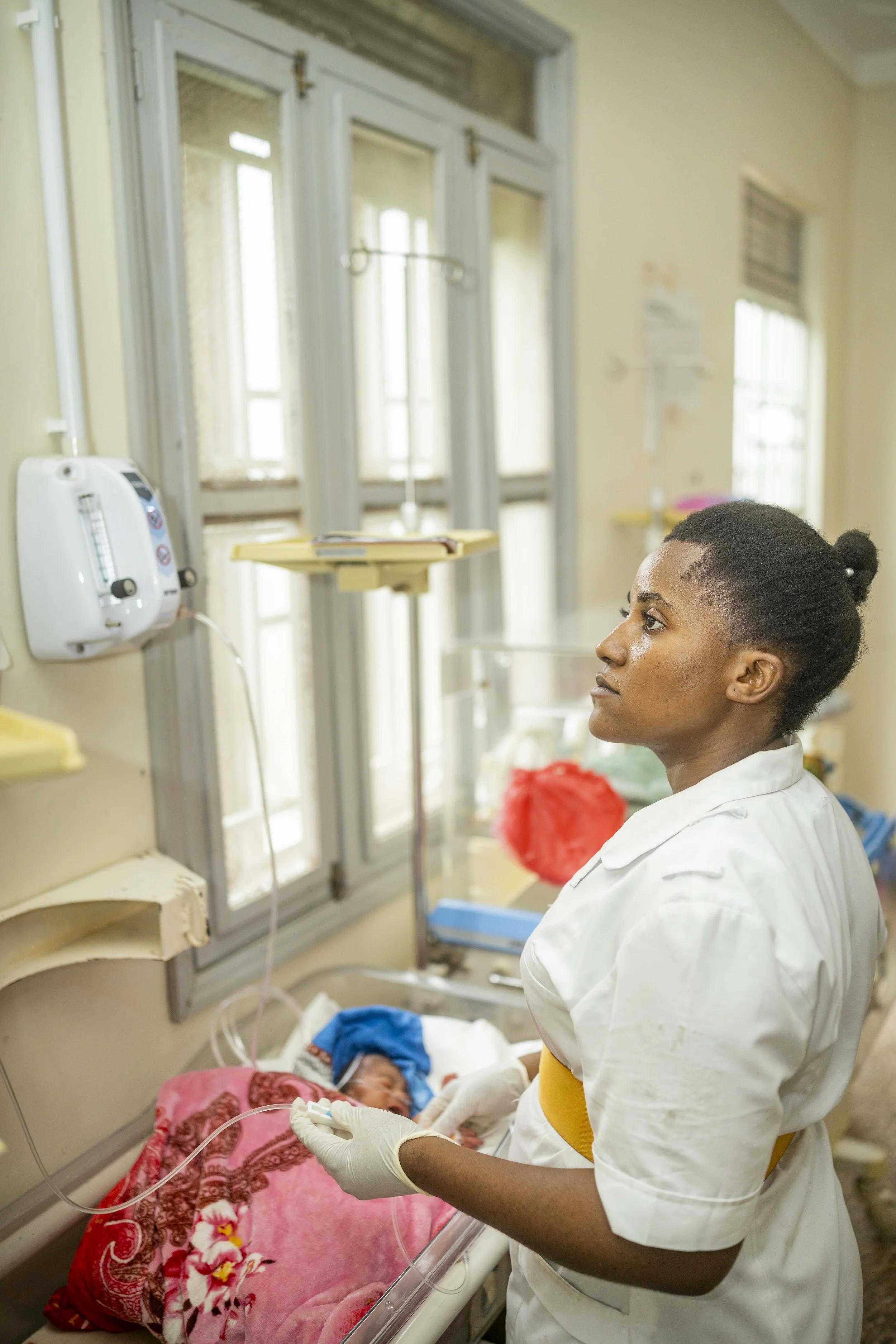
This approach is taking shape through FREO2's Oxygen as a Service (O2aaS) program in Uganda, delivered through a public-private partnership with the Ministry of Health and partners.
A 12-month evaluation followed 50 OxyLink bedside oxygen systems across 35 remote health facilities, monitoring system uptime, oxygen purity, maintenance response time, oxygen availability and progress towards government adoption.
The findings showed a significant improvement in oxygen reliability, with FREO2 systems achieving 96% uptime and 94% oxygen purity. Across FREO2's Uganda program, 26,831 children have been treated with FREO2-supported oxygen services.
But the numbers only tell part of the story.
Real-time monitoring has changed how oxygen services can be managed. Rather than waiting for a fault to be discovered during a physical visit, or after oxygen has already become unavailable, system performance can be monitored remotely. Problems can be identified and addressed proactively, while health facilities, FREO2 and government partners have greater visibility of how oxygen services are performing.
Most importantly, the model is moving beyond externally supported implementation towards government adoption.
That matters because long-term oxygen access cannot depend indefinitely on individual projects, donated equipment or short-term funding. Sustainable scale requires models that governments can integrate into existing health services, oversee and ultimately finance.
“For me, government adoption means moving from a model where an innovation is supported as a project to one where it becomes part of the health system. It means the government has visibility of the service, is involved in how it is managed, and can ultimately plan and budget for it. This is important for sustainability because a service cannot depend indefinitely on an external organisation or short-term project funding. When the government takes ownership and integrates the service into its existing systems, there is a pathway for it to continue beyond the life of the project. That is what makes the difference between a successful intervention and something that can be sustained and scaled beyond the life of a project.”
— Aminah Nanyondo, Uganda Country Manager, FREO2
From evidence to action
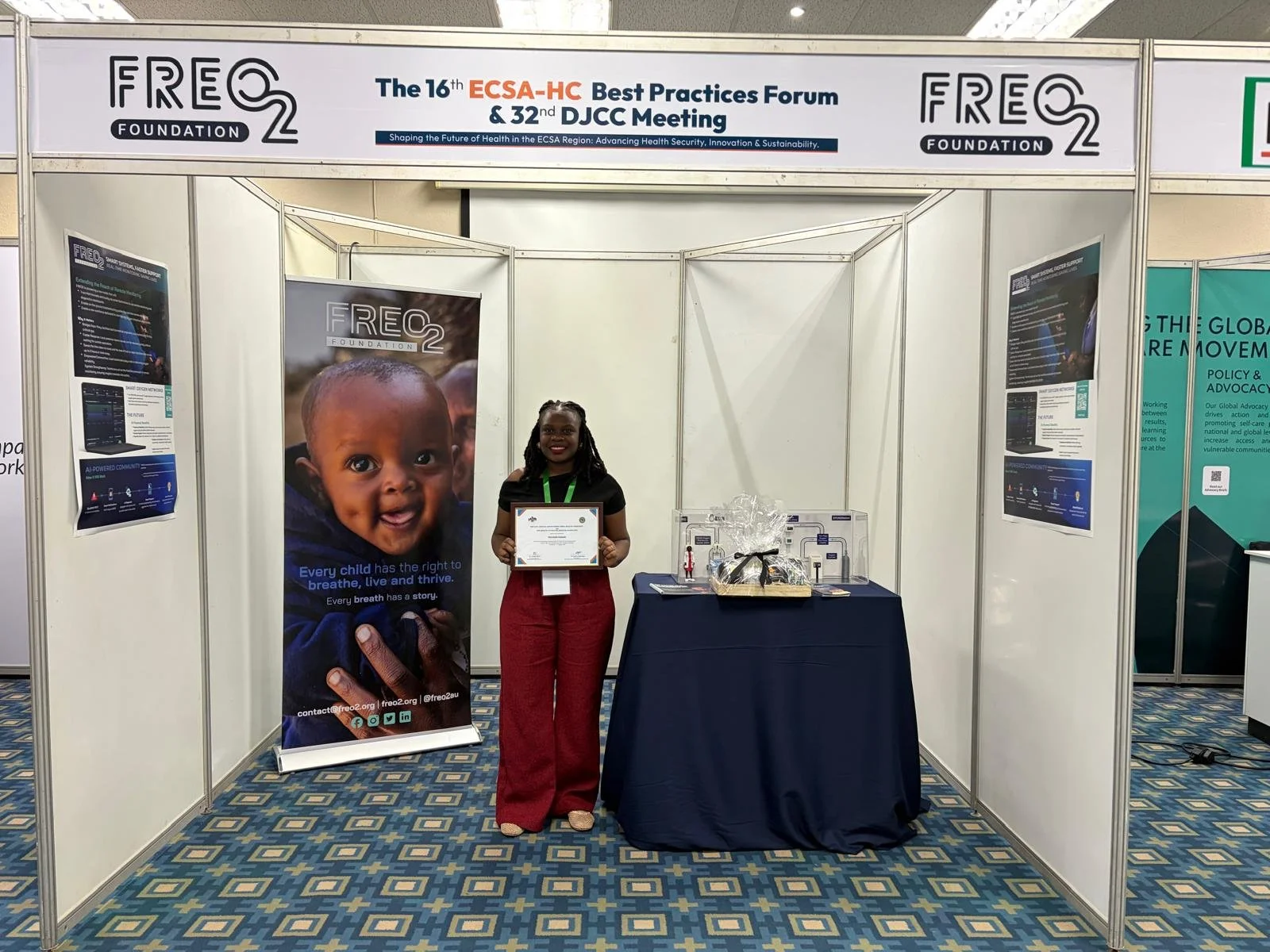
In August, these findings took FREO2's Uganda team to the 16th ECSA-HC Best Practices Forum and 32nd DJCC Meeting in Manzini, Eswatini.
One message echoed throughout the forum:
Innovation needs to generate evidence. Evidence needs to inform policy. And policy needs to translate into action and better health outcomes.
It's a pathway that speaks directly to the challenge facing medical oxygen.
A successful innovation or pilot is only the beginning. To reach more patients, we need to understand whether it works reliably, what it costs, how it fits within existing health systems and how it can ultimately be owned, financed and scaled locally.
FREO2 Uganda Country Manager Aminah Nanyondo presented research examining exactly that journey: From 51% Functionality to 96% Uptime: Government Adoption of a Private-Sector Oxygen-as-a-Service Innovation in Uganda.
Her presentation shared evidence from Uganda on what happens when oxygen is approached not simply as equipment, but as a service, supported by maintenance, monitoring, accountability, partnership and a pathway towards government ownership.
Aminah's work was recognised with the Best Young Researcher Award for best abstract presentation at the forum.
“I was incredibly honoured to receive the award but what meant the most to me was seeing the work from Uganda and the efforts of the wider team being recognised. This research builds on the collective experience of working alongside health workers, facilities, government partners and other partners and learning what it really takes to make oxygen systems work in practice. For me, the recognition was a reminder that the evidence we generate together through our programmes can contribute to a much bigger conversation about how we strengthen health systems across the region.”
For Aminah and the wider Uganda team, the recognition reflects something bigger: years of learning alongside health workers, facilities and government partners about what it takes to make reliable oxygen services work within real-world health systems.
Make it stand out
Whatever it is, the way you tell your story online can make all the difference.
“The biggest lesson for me is that equipment alone does not guarantee reliable oxygen access. It takes the right technology, health workers with the knowledge and confidence to use it, and the maintenance, monitoring and systems that keep everything working. What makes me proudest is seeing this work shift the conversation from simply asking whether a facility has an oxygen concentrator to whether it can reliably deliver oxygen care to a sick child. That is the change we ultimately want to see.”
And the conversation at ECSA-HC went well beyond FREO2. Across the forum, governments, researchers and health partners repeatedly returned to the same challenge: how do we move promising health innovations beyond pilots and into sustainable, locally owned health systems?
For oxygen, that question is critical.
From oxygen access to child survival
World Oxygen Day is an opportunity to recognise something deceptively simple: medical oxygen is essential healthcare.
But it’s also an opportunity to ask a more important question:
Is reliable oxygen care actually available when and where a patient needs it?
The experience in Uganda is helping us understand what it takes to make that possible: health workers with the right tools and knowledge, reliable oxygen delivery, local technical capacity, maintenance, monitoring, evidence, sustainable financing and government ownership.
Because none of those things is the end goal.
The goal is a health worker knowing that when a critically ill child needs oxygen, it will be there.
The future is reliable oxygen care built into everyday health services, strengthening the essential care that helps babies and children survive.
“For me, the most rewarding part of this work is seeing the difference that well-functioning systems can make in the everyday reality of care. It is easy to focus on the equipment, the data and the numbers, but behind each of them is a health worker trying to save a life and a care-giver / family trusting the health system to care for their child. Being part of building systems that make that care possible is what keeps this work meaningful for me.”
Because every child deserves access to life-saving care.
Every breath is a chance at life.